


Agile PMOs are essential in modern organizations as they help implement agile practices, align projects with strategic goals, and ensure effective governance. Key steps include securing executive support, providing training, establishing frameworks, fostering collaboration, and committing to continuous improvement. To measure their effectiveness, PMOs should track delivery speed, quality, stakeholder engagement, and alignment with strategic objectives, ultimately driving value and project success in a dynamic environment.
In today’s fast-paced business environment, the demand for Agile and Effective PMOs (Project Management Offices) has never been higher. Organizations are constantly seeking ways to enhance their project management capabilities to stay competitive. By incorporating agile methodologies, PMOs can significantly improve their responsiveness and efficiency. This article delves into the strategies that can help you build an agile and effective PMO, ensuring your organization thrives in a dynamic market.
Understanding the Role of PMOs in Agile Environments

The role of Project Management Offices (PMOs) has evolved significantly with the advent of agile methodologies. Traditionally, PMOs were seen as the custodians of project management standards, ensuring compliance with established processes and methodologies. However, in an agile environment, the PMO’s role extends beyond mere oversight to becoming an enabler of agility and flexibility within the organization.
One of the primary functions of a PMO in an agile environment is to facilitate the adoption and integration of agile practices across various teams and projects. This involves providing training and resources, establishing agile frameworks, and promoting a culture of continuous improvement. By doing so, the PMO helps teams to deliver value more efficiently and respond to changing business needs more effectively.
Aligning Projects with Strategic Objectives
Additionally, the PMO plays a crucial role in aligning agile projects with the organization’s strategic objectives. This alignment ensures that all projects contribute to the overall business goals, thereby maximizing the return on investment. The PMO achieves this by maintaining a portfolio view of all projects, prioritizing initiatives based on their strategic importance, and reallocating resources as needed to support high-priority projects.
Another important aspect of the PMO’s role in an agile environment is governance. While agile methodologies emphasize flexibility and adaptability, governance remains essential to ensure that projects are delivered on time, within scope, and on budget. The PMO establishes governance frameworks that balance the need for control with the principles of agility. This includes setting up metrics and KPIs to monitor project performance, conducting regular reviews, and providing feedback to teams.
In conclusion, the role of PMOs in agile environments is multifaceted and dynamic. By enabling the adoption of agile practices, aligning projects with strategic objectives, and ensuring effective governance, PMOs can drive organizational agility and enhance overall project success. As businesses continue to navigate the complexities of the modern market, the agile PMO stands as a pivotal component in achieving sustained competitive advantage.
Implementing Agile Methodologies in PMOs
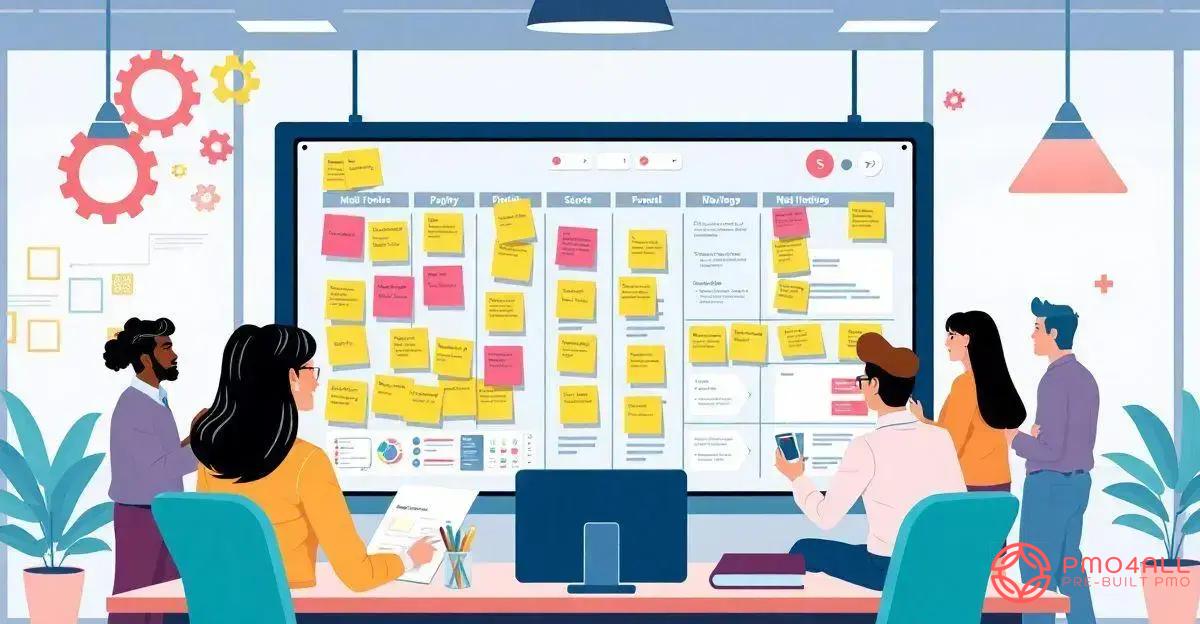
Implementing agile methodologies within Project Management Offices (PMOs) requires a thoughtful and strategic approach. The transition from traditional project management practices to agile methodologies involves several key steps, each designed to foster an environment of flexibility, collaboration, and continuous improvement.
Firstly, it is essential to secure executive sponsorship and buy-in from senior leadership. Without the support of top management, efforts to implement agile methodologies may face significant resistance. Executives need to understand the benefits of agile practices, such as increased responsiveness to market changes and improved project delivery times. They should also be prepared to champion these changes and provide the necessary resources for successful implementation.
Once executive support is secured, the next step is to provide comprehensive training and development for PMO staff and project teams. Agile methodologies, such as Scrum, Kanban, and Lean, require a shift in mindset and practices. Training programs should cover the principles and practices of agile, as well as specific frameworks and tools. Additionally, ongoing coaching and mentoring can help teams to internalize agile practices and apply them effectively in their projects.
Establishing an Agile Framework
Establishing an agile framework within the PMO is another critical step. This framework should outline the processes, roles, and responsibilities associated with agile project management. It should also include guidelines for agile ceremonies, such as daily stand-ups, sprint planning, and retrospectives. By providing a clear structure, the PMO can ensure consistency in agile practices across the organization while allowing for flexibility and adaptation as needed.
Collaboration and communication are at the heart of agile methodologies. The PMO should foster a culture of open communication and collaboration among project teams, stakeholders, and customers. This can be achieved through regular meetings, collaborative tools, and transparent reporting. By encouraging frequent and open dialogue, the PMO can ensure that all parties are aligned and working towards common goals.
Finally, continuous improvement is a cornerstone of agile methodologies. The PMO should establish mechanisms for regularly reviewing and refining agile practices. This can include conducting retrospectives at the end of each sprint, gathering feedback from team members and stakeholders, and analyzing project performance data. By continuously seeking ways to improve, the PMO can enhance its agility and effectiveness over time.
In summary, implementing agile methodologies in PMOs involves securing executive support, providing training, establishing an agile framework, fostering collaboration, and committing to continuous improvement. By following these steps, PMOs can successfully transition to agile practices and drive greater project success in today’s dynamic business environment.
Measuring the Effectiveness of Agile PMOs

Measuring the effectiveness of Agile PMOs (Project Management Offices) is crucial for ensuring that the adoption of agile methodologies is delivering the desired outcomes. This process involves the use of various metrics and key performance indicators (KPIs) to assess the performance and impact of the PMO on project success and organizational agility.
One of the primary metrics for measuring the effectiveness of an Agile PMO is the delivery speed of projects. Agile methodologies emphasize rapid and iterative delivery, so tracking the time it takes to complete sprints, releases, and entire projects can provide valuable insights. Metrics such as cycle time, lead time, and velocity can help PMOs understand how quickly teams are delivering value and identify any bottlenecks that may be slowing down progress.
Another important metric is the quality of deliverables. Agile PMOs should monitor defect rates, customer satisfaction scores, and the number of successful releases to gauge the quality of the products being delivered. High-quality deliverables are a key indicator of the effectiveness of agile practices, as they reflect the PMO’s ability to meet customer needs and expectations.
The level of stakeholder engagement and satisfaction is also a critical measure of an Agile PMO’s effectiveness. Regular feedback from stakeholders, including project sponsors, team members, and customers, can provide valuable insights into how well the PMO is facilitating collaboration and communication. Surveys, interviews, and feedback sessions can be used to gather this information and identify areas for improvement.
Additionally, the PMO should track the alignment of projects with strategic objectives. This involves assessing whether projects are delivering the expected business value and contributing to the organization’s goals. Metrics such as return on investment (ROI), business value delivered, and strategic alignment scores can help PMOs evaluate the impact of their projects on the overall success of the organization.
Another key aspect of measuring the effectiveness of Agile PMOs is the continuous improvement of agile practices. The PMO should establish mechanisms for regularly reviewing and refining its processes, such as conducting retrospectives, analyzing performance data, and implementing feedback from teams and stakeholders. By continuously seeking ways to improve, the PMO can enhance its agility and effectiveness over time.
In conclusion, measuring the effectiveness of Agile PMOs involves tracking delivery speed, quality of deliverables, stakeholder engagement, alignment with strategic objectives, and continuous improvement. By using these metrics and KPIs, PMOs can ensure that their agile practices are driving project success and contributing to organizational agility.
In conclusion, the transformation of Project Management Offices (PMOs) into agile and effective entities is not merely a trend but a necessity in today’s dynamic business landscape. By understanding the evolving role of PMOs in agile environments, organizations can better position themselves to adopt and integrate agile methodologies. This involves securing executive sponsorship, providing comprehensive training, establishing clear frameworks, fostering collaboration, and committing to continuous improvement.
Moreover, the effectiveness of Agile PMOs must be measured through a variety of metrics, including delivery speed, quality of deliverables, stakeholder engagement, alignment with strategic objectives, and ongoing refinement of agile practices. These metrics not only provide insights into the PMO’s performance but also highlight areas for further enhancement.
As businesses continue to navigate the complexities of the modern market, the agile PMO stands as a pivotal component in achieving sustained competitive advantage. By embracing agility and focusing on continuous improvement, PMOs can drive significant value, ensuring that projects are delivered efficiently and effectively, and that they align with the broader strategic goals of the organization. The journey towards building an agile and effective PMO is ongoing, but with the right strategies and metrics in place, organizations can thrive in an ever-changing environment.
Frequently Asked Questions about Agile and Effective PMOs
What is the role of a PMO in an agile environment?
In an agile environment, the PMO facilitates the adoption of agile practices, aligns projects with strategic objectives, and ensures effective governance while promoting flexibility and continuous improvement.
How can a PMO implement agile methodologies?
Implementing agile methodologies in a PMO involves securing executive support, providing comprehensive training, establishing an agile framework, fostering collaboration, and committing to continuous improvement.
What metrics are used to measure the effectiveness of Agile PMOs?
Metrics such as delivery speed, quality of deliverables, stakeholder engagement, alignment with strategic objectives, and continuous improvement are used to measure the effectiveness of Agile PMOs.
Why is executive sponsorship important for implementing agile in PMOs?
Executive sponsorship is crucial as it provides the necessary support and resources for agile implementation, helps overcome resistance, and ensures alignment with organizational goals.
How does an Agile PMO align projects with strategic objectives?
An Agile PMO aligns projects with strategic objectives by maintaining a portfolio view of all projects, prioritizing initiatives based on their strategic importance, and reallocating resources to support high-priority projects.
What are some key practices for fostering collaboration in an Agile PMO?
Key practices include regular meetings, using collaborative tools, transparent reporting, and encouraging open communication among project teams, stakeholders, and customers.





Leave A Comment