

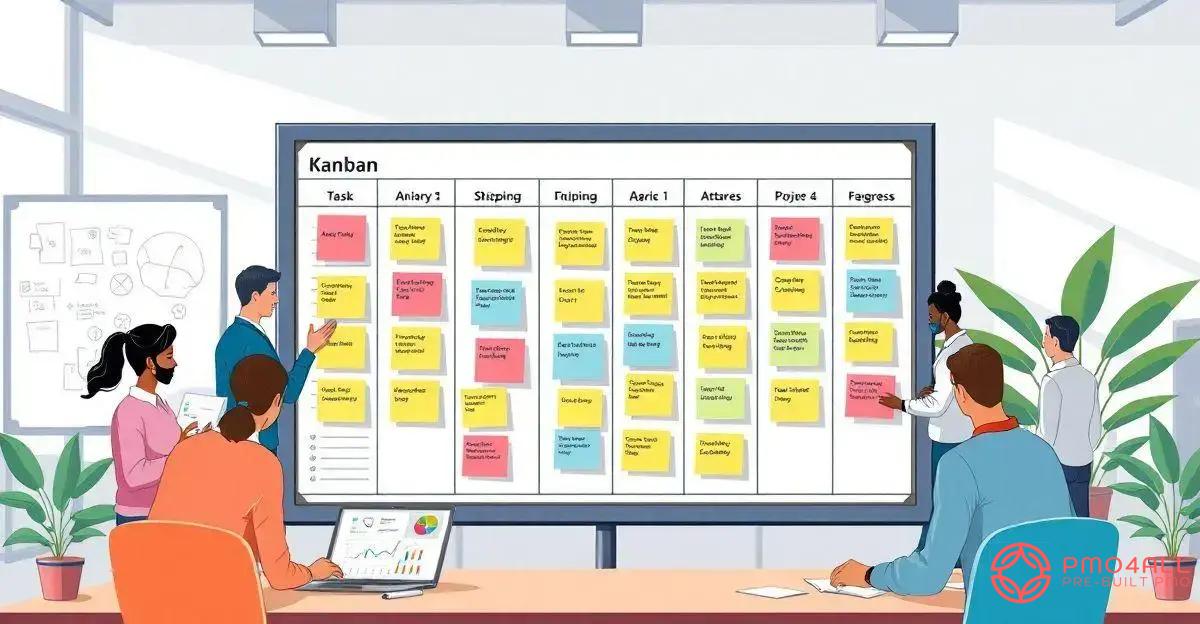
Agile Management with Kanban improves workflow efficiency and transparency by visualizing tasks on a board and limiting work in progress (WIP). To implement Kanban, set up a board with defined workflow stages, establish WIP limits, and conduct regular reviews. Key metrics such as cycle time, lead time, and throughput, along with tools like Jira and Trello, facilitate effective implementation. Following best practices, including starting with current processes and performing regular retrospectives, is essential for success, while avoiding common pitfalls like neglecting board updates and setting unrealistic WIP limits is crucial.
Agile Management using Kanban has become a cornerstone for organizations aiming to enhance their project delivery processes. By integrating the principles of Kanban into Agile frameworks, teams can achieve greater efficiency, transparency, and adaptability. In this guide, we will explore the foundational concepts of Kanban, its implementation in Agile projects, essential metrics and tools, and best practices to avoid common pitfalls. Whether you are new to Agile or looking to refine your approach, this comprehensive guide will provide valuable insights to optimize your project management strategies.
Understanding the Basics of Kanban in Agile Management
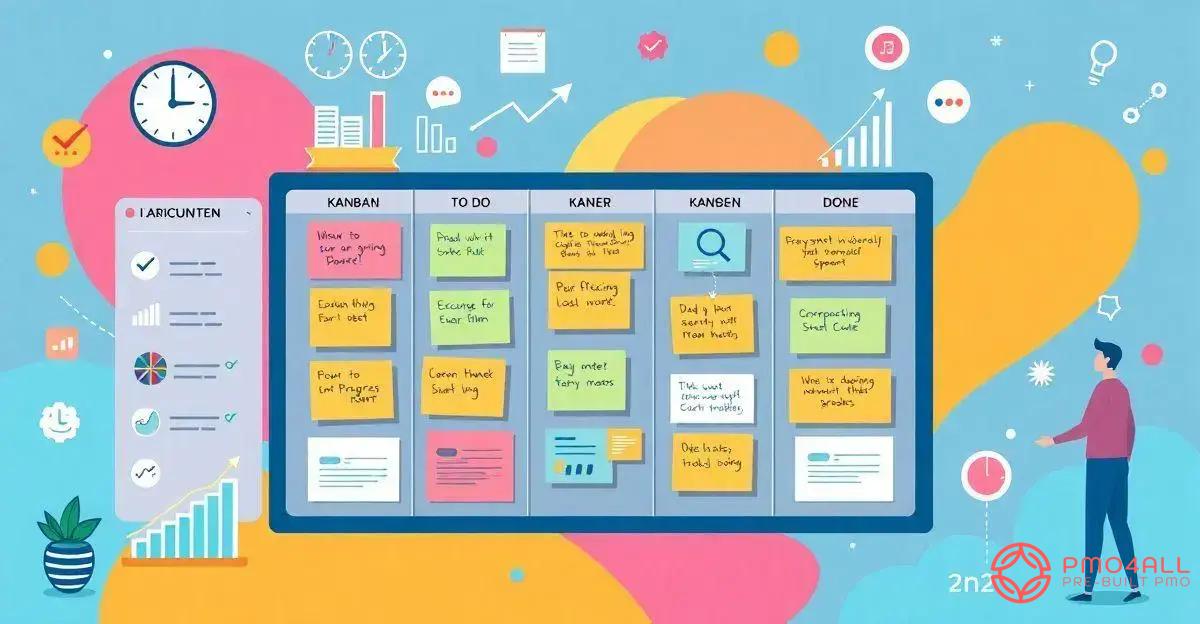
Kanban, a term derived from Japanese meaning ‘visual signal’ or ‘card,’ is a method that provides a visual framework for managing work as it moves through a process. In the context of Agile Management, Kanban is utilized to enhance workflow efficiency, transparency, and continuous improvement. The primary objective of Kanban is to visualize the work, limit work in progress (WIP), and maximize flow efficiency.
At its core, Kanban employs a board, typically divided into columns that represent different stages of the workflow. These columns might include stages such as ‘To Do,’ ‘In Progress,’ and ‘Done.’ Each task or work item is represented by a card that moves across the board as it progresses through these stages. This visual representation allows team members to see the status of tasks at a glance, identify bottlenecks, and make data-driven decisions to optimize the process.
One of the key principles of Kanban is limiting WIP. By restricting the number of tasks that can be in progress at any given time, teams can focus on completing tasks more efficiently and avoid the pitfalls of multitasking. This principle helps in maintaining a steady flow of work and ensures that tasks are completed before new ones are started.
Another fundamental aspect of Kanban is its emphasis on continuous improvement. Teams regularly review their processes and performance, often through retrospectives, to identify areas for enhancement. This iterative approach aligns well with Agile methodologies, which prioritize adaptability and responsiveness to change.
To illustrate, consider a software development team using Kanban. They might have columns for ‘Backlog,’ ‘Design,’ ‘Development,’ ‘Testing,’ and ‘Deployment.’ By visualizing their workflow on a Kanban board, they can quickly identify if too many tasks are stuck in the ‘Testing’ phase, indicating a potential bottleneck. They can then take corrective actions, such as reallocating resources or adjusting their testing processes, to improve flow efficiency.
In summary, understanding the basics of Kanban in Agile Management involves grasping its visual nature, the importance of limiting WIP, and the focus on continuous improvement. By leveraging these principles, teams can achieve greater transparency, efficiency, and adaptability in their project management practices.
Implementing Kanban for Agile Project Management

Implementing Kanban for Agile Project Management involves several key steps that ensure the methodology is effectively integrated into the team’s workflow. The process begins with setting up a Kanban board, which serves as the central visual tool for managing tasks and tracking progress.
The first step is to define the workflow stages. These stages should reflect the specific processes and phases that tasks go through from inception to completion. Common stages might include ‘Backlog,’ ‘To Do,’ ‘In Progress,’ ‘Review,’ and ‘Done.’ Customizing these stages to fit the unique needs of the team or project is crucial for accurate representation and efficient management.
Once the workflow stages are established, the next step is to populate the Kanban board with tasks or work items. Each task is represented by a card that includes essential details such as the task description, assignee, due date, and any relevant notes. These cards are then placed in the appropriate columns based on their current status. This visual representation allows team members to quickly assess the state of the project and identify any tasks that require attention.
A critical aspect of Kanban implementation is setting Work In Progress (WIP) limits. WIP limits restrict the number of tasks that can be in a particular stage at any given time. For example, a team might decide that no more than three tasks can be in the ‘In Progress’ stage simultaneously. This constraint helps prevent overloading team members, reduces multitasking, and ensures a steady flow of work through the system.
Regularly reviewing and updating the Kanban board is essential for maintaining its effectiveness. Teams should hold daily stand-up meetings to discuss the status of tasks, identify any blockers, and plan their work for the day. These meetings foster communication and collaboration, ensuring that everyone is aligned and aware of the project’s progress.
Additionally, implementing Kanban involves continuous monitoring and improvement. Teams should conduct periodic retrospectives to evaluate their processes, identify bottlenecks, and implement changes to enhance efficiency. Metrics such as cycle time, lead time, and throughput can provide valuable insights into the team’s performance and highlight areas for improvement.
For instance, a marketing team using Kanban might have stages like ‘Idea Generation,’ ‘Content Creation,’ ‘Review,’ ‘Approval,’ and ‘Published.’ By setting WIP limits and regularly reviewing their board, they can ensure a smooth flow of content production and quickly address any issues that arise.
In conclusion, implementing Kanban for Agile Project Management requires careful planning, regular monitoring, and a commitment to continuous improvement. By setting up a Kanban board, defining workflow stages, setting WIP limits, and conducting regular reviews, teams can enhance their project management practices and achieve greater efficiency and transparency.
Key Metrics and Tools for Kanban
Implementing Kanban in Agile Management requires adherence to best practices to maximize its benefits while being mindful of common pitfalls that can hinder its effectiveness. Understanding these elements can significantly enhance the efficiency and transparency of your project management processes.
One of the best practices in Kanban is to start with what you do now. Unlike other methodologies that require a complete overhaul of existing processes, Kanban encourages teams to visualize their current workflow and make incremental improvements. This approach minimizes disruption and allows for smoother transitions.
Another crucial practice is to limit Work In Progress (WIP). Setting WIP limits helps teams focus on completing tasks before starting new ones, reducing multitasking and preventing bottlenecks. It ensures a steady flow of work and enhances overall productivity. For instance, a team might set a WIP limit of three tasks in the ‘In Progress’ stage, ensuring that they are not overwhelmed with too many concurrent tasks.
Regularly reviewing and adjusting WIP limits based on team capacity and project demands is also essential. This flexibility allows teams to adapt to changing circumstances and maintain optimal workflow efficiency. Additionally, conducting regular retrospectives to evaluate processes and identify areas for improvement aligns with the continuous improvement philosophy of Kanban.
Clear and transparent communication is another best practice. Ensuring that all team members understand the workflow stages, WIP limits, and the criteria for moving tasks between stages fosters collaboration and reduces misunderstandings. Daily stand-up meetings can facilitate this communication, allowing team members to discuss progress, address blockers, and plan their work.
However, there are common pitfalls to avoid when implementing Kanban. One such pitfall is neglecting to update the Kanban board regularly. An outdated board can lead to confusion and miscommunication, undermining the effectiveness of the Kanban system. Ensuring that the board is consistently updated with the latest task statuses is crucial for maintaining transparency and accuracy.
Another pitfall is setting unrealistic WIP limits. Overly restrictive limits can lead to idle time and underutilization of resources, while overly lenient limits can result in multitasking and inefficiencies. Finding the right balance requires continuous monitoring and adjustment based on team performance and workload.
Additionally, failing to conduct regular retrospectives can hinder continuous improvement. Without periodic evaluations, teams may miss opportunities to optimize their processes and address recurring issues. Retrospectives provide a structured forum for reflecting on past performance and planning future enhancements.
For example, a marketing team using Kanban might initially set a WIP limit of five tasks in the ‘Content Creation’ stage. However, they may find that this limit leads to delays in the ‘Review’ stage. By conducting a retrospective, they can identify this bottleneck and adjust the WIP limit to three tasks, improving overall workflow efficiency.
In conclusion, adhering to best practices such as starting with current processes, limiting WIP, maintaining clear communication, and conducting regular retrospectives can significantly enhance the effectiveness of Kanban in Agile Management. Being mindful of common pitfalls, such as neglecting board updates and setting unrealistic WIP limits, ensures that teams can fully leverage the benefits of Kanban and achieve greater efficiency and transparency in their project management practices.
Best Practices and Common Pitfalls in Kanban
Implementing Kanban in Agile Management requires adherence to best practices to maximize its benefits while being mindful of common pitfalls that can hinder its effectiveness. Understanding these elements can significantly enhance the efficiency and transparency of your project management processes.
One of the best practices in Kanban is to start with what you do now. Unlike other methodologies that require a complete overhaul of existing processes, Kanban encourages teams to visualize their current workflow and make incremental improvements. This approach minimizes disruption and allows for smoother transitions.
Another crucial practice is to limit Work In Progress (WIP). Setting WIP limits helps teams focus on completing tasks before starting new ones, reducing multitasking and preventing bottlenecks. It ensures a steady flow of work and enhances overall productivity. For instance, a team might set a WIP limit of three tasks in the ‘In Progress’ stage, ensuring that they are not overwhelmed with too many concurrent tasks.
Regularly reviewing and adjusting WIP limits based on team capacity and project demands is also essential. This flexibility allows teams to adapt to changing circumstances and maintain optimal workflow efficiency. Additionally, conducting regular retrospectives to evaluate processes and identify areas for improvement aligns with the continuous improvement philosophy of Kanban.
Clear and transparent communication is another best practice. Ensuring that all team members understand the workflow stages, WIP limits, and the criteria for moving tasks between stages fosters collaboration and reduces misunderstandings. Daily stand-up meetings can facilitate this communication, allowing team members to discuss progress, address blockers, and plan their work.
However, there are common pitfalls to avoid when implementing Kanban. One such pitfall is neglecting to update the Kanban board regularly. An outdated board can lead to confusion and miscommunication, undermining the effectiveness of the Kanban system. Ensuring that the board is consistently updated with the latest task statuses is crucial for maintaining transparency and accuracy.
Another pitfall is setting unrealistic WIP limits. Overly restrictive limits can lead to idle time and underutilization of resources, while overly lenient limits can result in multitasking and inefficiencies. Finding the right balance requires continuous monitoring and adjustment based on team performance and workload.
Additionally, failing to conduct regular retrospectives can hinder continuous improvement. Without periodic evaluations, teams may miss opportunities to optimize their processes and address recurring issues. Retrospectives provide a structured forum for reflecting on past performance and planning future enhancements.
For example, a marketing team using Kanban might initially set a WIP limit of five tasks in the ‘Content Creation’ stage. However, they may find that this limit leads to delays in the ‘Review’ stage. By conducting a retrospective, they can identify this bottleneck and adjust the WIP limit to three tasks, improving overall workflow efficiency.
In conclusion, adhering to best practices such as starting with current processes, limiting WIP, maintaining clear communication, and conducting regular retrospectives can significantly enhance the effectiveness of Kanban in Agile Management. Being mindful of common pitfalls, such as neglecting board updates and setting unrealistic WIP limits, ensures that teams can fully leverage the benefits of Kanban and achieve greater efficiency and transparency in their project management practices.
In conclusion, Agile Management using Kanban offers a robust framework for enhancing workflow efficiency, transparency, and continuous improvement.
By understanding the basics of Kanban, teams can visualize their processes and make data-driven decisions to optimize their workflows.
Implementing Kanban involves setting up a board with defined workflow stages, setting Work In Progress (WIP) limits, and regularly reviewing and updating the board to maintain its effectiveness.
Key metrics such as cycle time, lead time, and throughput provide valuable insights into team performance and process efficiency.
Leveraging tools like Jira, Trello, and Kanbanize can further enhance the implementation by offering advanced reporting and analytics features.
Adhering to best practices, such as starting with current processes, maintaining clear communication, and conducting regular retrospectives, ensures that teams can fully benefit from the Kanban methodology.
However, it is equally important to be mindful of common pitfalls, such as neglecting board updates and setting unrealistic WIP limits, which can undermine the effectiveness of the system.
By continuously monitoring and adjusting their processes, teams can achieve greater efficiency, adaptability, and transparency in their project management practices.
Ultimately, Kanban’s flexibility and focus on continuous improvement make it an ideal choice for Agile Management.
Whether you are new to Agile or looking to refine your approach, integrating Kanban into your project management strategy can lead to significant enhancements in productivity and team collaboration.
Frequently Asked Questions about Agile Management using Kanban
What is Kanban in Agile Management?
Kanban is a visual framework used in Agile Management to enhance workflow efficiency, transparency, and continuous improvement by visualizing tasks on a board and limiting work in progress.
How do you implement Kanban in Agile projects?
Implementing Kanban involves setting up a Kanban board with defined workflow stages, setting Work In Progress (WIP) limits, and regularly reviewing and updating the board to maintain its effectiveness.
What are the key metrics in Kanban?
The key metrics in Kanban include cycle time, lead time, and throughput, which provide insights into team performance and process efficiency.
What tools can be used for Kanban implementation?
Tools like Jira, Trello, and Kanbanize offer built-in Kanban board functionalities along with advanced reporting and analytics features to support Kanban implementation.
What are some best practices for using Kanban?
Best practices for using Kanban include starting with current processes, limiting Work In Progress (WIP), maintaining clear communication, and conducting regular retrospectives.
What are common pitfalls to avoid in Kanban?
Common pitfalls in Kanban include neglecting to update the Kanban board regularly and setting unrealistic WIP limits, which can undermine the effectiveness of the system.






Leave A Comment