


Design Thinking and Innovation in Projects emphasizes a user-centric approach to problem-solving, enhancing creativity and collaboration. By aligning project goals with user needs and adopting iterative processes, organizations can effectively integrate Design Thinking into project management. This approach has proven successful across various industries, including healthcare, technology, education, and retail. However, challenges such as resistance to change and resource constraints can be addressed through training and leadership support. Utilizing established methodologies like PMO4ALL can facilitate this integration, optimizing time and resources for successful project outcomes.
In today’s fast-paced business environment, leveraging Design Thinking and Innovation in Projects is crucial for staying competitive. Design Thinking, a user-centric approach to problem-solving, has proven to be a powerful tool in driving innovation and achieving project success. By integrating Design Thinking into project management, organizations can foster creativity, enhance collaboration, and deliver solutions that truly meet user needs. This article explores the fundamentals of Design Thinking, its integration into project management, real-world applications, and the challenges and solutions in its implementation.
Understanding Design Thinking: A Primer
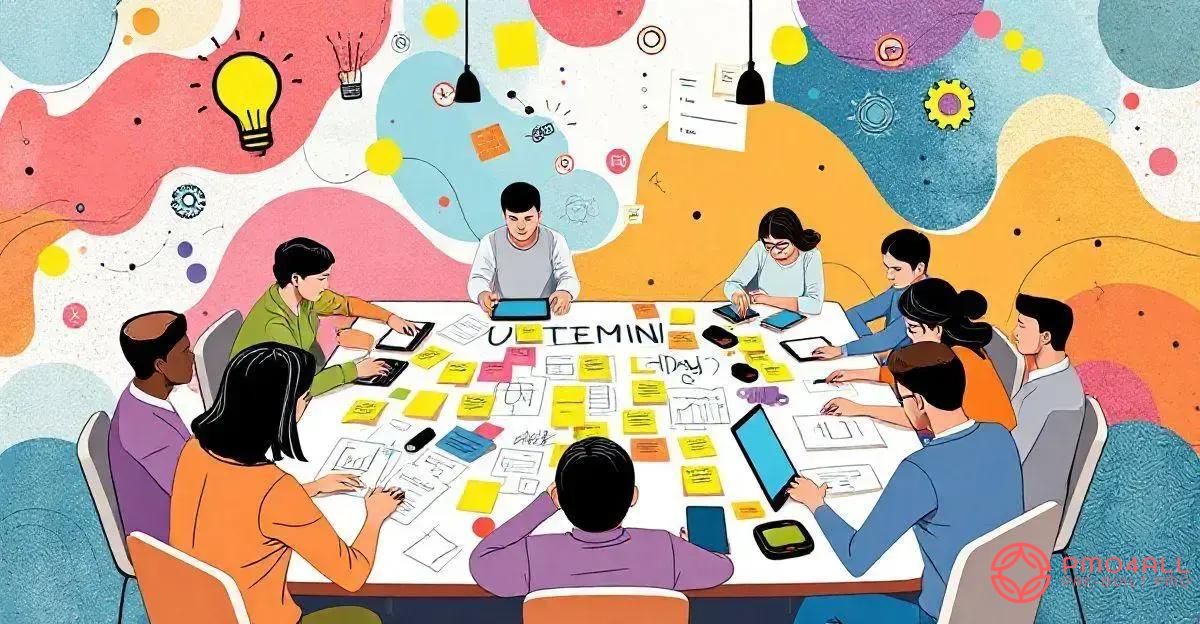
Understanding Design Thinking: Design Thinking is a human-centered approach to innovation that draws from the designer’s toolkit to integrate the needs of people, the possibilities of technology, and the requirements for business success. At its core, Design Thinking revolves around a deep interest in developing an understanding of the people for whom we are designing the products or services. It helps us observe and develop empathy with the target user.
The process of Design Thinking can be broken down into five stages: Empathize, Define, Ideate, Prototype, and Test. These stages are not always sequential and can often occur in parallel and repeat iteratively. The Empathize stage involves gaining a deep understanding of the users’ needs and challenges through techniques such as interviews, observations, and immersion. The Define stage focuses on synthesizing the information gathered during the Empathize stage to identify core problems and articulate them clearly. In the Ideate stage, diverse teams brainstorm a wide range of creative solutions. The Prototype stage involves creating scaled-down versions of the product or specific features found within the product to investigate the ideas generated. Finally, the Test stage involves rigorous testing of the prototypes with users to gather feedback and refine the solutions.
One of the key principles of Design Thinking is its iterative nature. Unlike traditional project management approaches that may follow a linear path, Design Thinking encourages continuous iteration based on user feedback. This iterative process helps in refining and improving the solutions to better meet user needs. Additionally, Design Thinking promotes a collaborative approach, bringing together cross-functional teams to leverage diverse perspectives and expertise.
Understanding Design Thinking is essential for any organization looking to foster innovation and stay competitive. By focusing on the end-user and embracing an iterative, collaborative process, Design Thinking can lead to more effective and innovative solutions. Wouldn’t it be more efficient to implement a proven, ready-to-use methodology that’s already available in several languages, rather than building one from scratch? PMO4ALL offers a comprehensive, pre-built methodology that can help you seamlessly integrate Design Thinking into your projects, saving time and resources while ensuring successful outcomes.
Integrating Design Thinking into Project Management
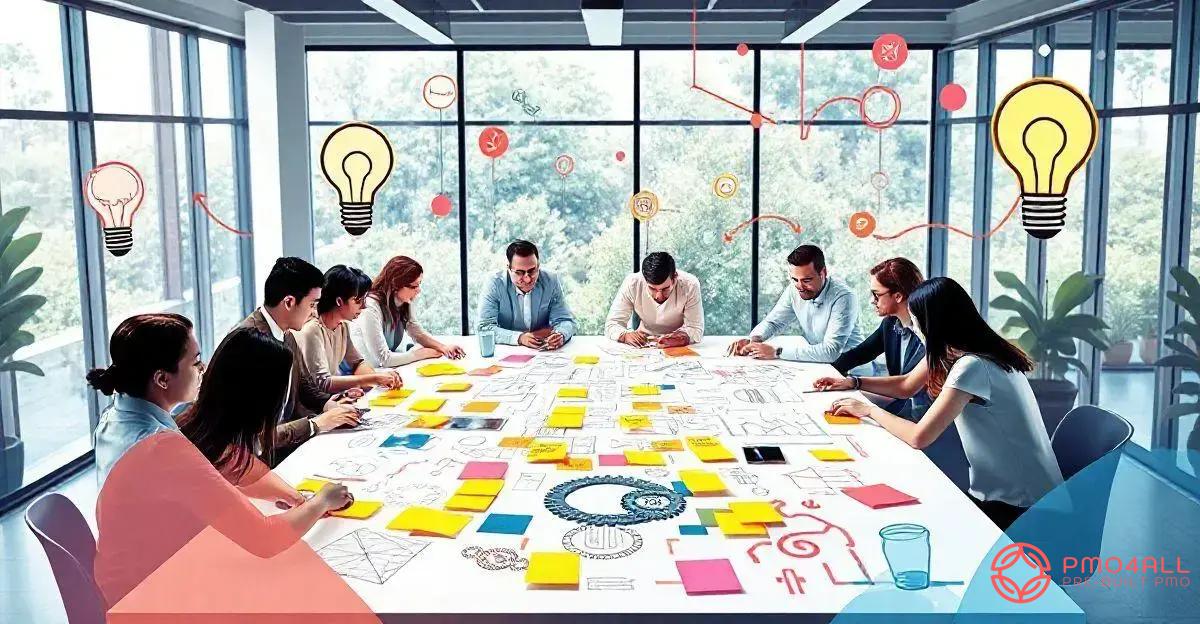
Integrating Design Thinking into project management involves blending traditional project management practices with the innovative and user-centric principles of Design Thinking. This integration can enhance the overall effectiveness of project management by fostering creativity, improving stakeholder engagement, and ensuring that the final deliverables meet user needs.
The first step in integrating Design Thinking into project management is to align the project goals with the principles of Design Thinking. This involves ensuring that the project objectives are user-centered and focused on solving real problems. Project managers should work closely with stakeholders to understand their needs and expectations, using techniques such as user interviews, surveys, and workshops.
Next, it is essential to incorporate the iterative nature of Design Thinking into the project management process. Traditional project management often follows a linear, phase-based approach, whereas Design Thinking emphasizes continuous iteration and refinement. Project managers can achieve this by adopting agile methodologies, which are inherently iterative and flexible. For example, Scrum, an agile framework, can be effectively combined with Design Thinking to create a dynamic and responsive project management approach. In Scrum, the project is divided into small, manageable increments called sprints, allowing for regular feedback and adjustments based on user input.
Collaboration and Prototyping
Another critical aspect of integrating Design Thinking into project management is fostering a collaborative environment. Design Thinking thrives on diverse perspectives and cross-functional collaboration. Project managers should create opportunities for team members from different disciplines to work together, share ideas, and contribute to the problem-solving process. Techniques such as brainstorming sessions, co-creation workshops, and design sprints can facilitate this collaborative approach.
Additionally, project managers should leverage prototyping and testing as integral parts of the project lifecycle. Prototyping allows teams to create tangible representations of their ideas, which can be tested and refined based on user feedback. This iterative process helps in identifying potential issues early and ensures that the final deliverables are aligned with user needs. By incorporating regular testing and feedback loops, project managers can mitigate risks and increase the likelihood of project success.
Integrating Design Thinking into project management requires a shift in mindset and practices. However, the benefits of this integration are substantial, leading to more innovative solutions, improved stakeholder satisfaction, and successful project outcomes. Wouldn’t it be more efficient to implement a proven, ready-to-use methodology that’s already available in several languages, rather than building one from scratch? PMO4ALL offers a comprehensive, pre-built methodology that can help you seamlessly integrate Design Thinking into your projects, saving time and resources while ensuring successful outcomes.
Real-World Applications of Design Thinking in Projects
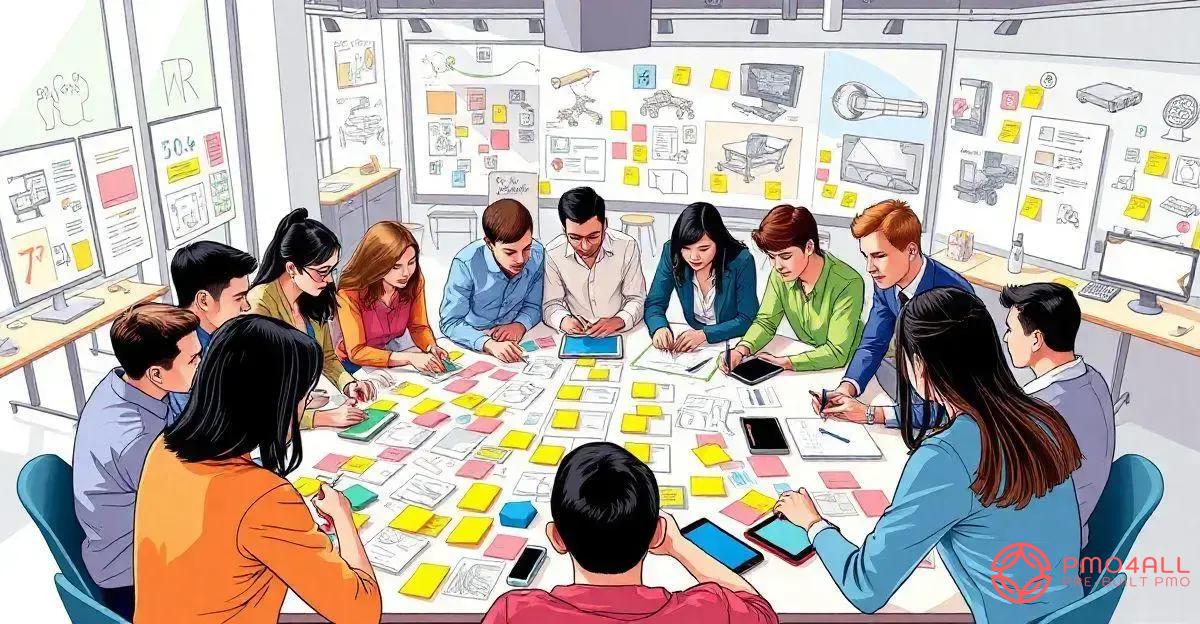
Implementing Design Thinking in projects can present several challenges, but with the right strategies and solutions, these obstacles can be effectively managed. Understanding and addressing these challenges is crucial for organizations aiming to leverage Design Thinking to drive innovation and achieve project success.
One common challenge is resistance to change. Traditional project management practices are often deeply ingrained in organizational culture, and introducing a new approach like Design Thinking can be met with skepticism or resistance. To overcome this, it is essential to build a strong case for Design Thinking by demonstrating its benefits and aligning it with organizational goals. Leadership support is critical in driving this cultural shift. Leaders should actively promote Design Thinking principles, provide training and resources, and recognize and reward teams that successfully apply these practices.
Another challenge is the lack of understanding or expertise in Design Thinking. Many project managers and team members may be unfamiliar with the principles and processes of Design Thinking. To address this, organizations should invest in comprehensive training programs that cover the fundamentals of Design Thinking and its application in project management. Workshops, seminars, and hands-on training sessions can help build the necessary skills and knowledge. Additionally, hiring or consulting with Design Thinking experts can provide valuable guidance and support during the initial implementation phase.
Integrating Design Thinking into existing project management frameworks can also be challenging. Traditional project management methodologies, such as Waterfall, may not easily accommodate the iterative and flexible nature of Design Thinking. To resolve this, organizations can adopt hybrid approaches that combine elements of Design Thinking with agile methodologies like Scrum or Kanban. These hybrid models allow for iterative development, continuous feedback, and adaptive planning, making it easier to incorporate Design Thinking principles into the project lifecycle.
Time and resource constraints can pose significant challenges when implementing Design Thinking. The iterative nature of Design Thinking requires time for prototyping, testing, and refining solutions, which may not always align with tight project deadlines or limited budgets. To mitigate this, project managers should prioritize and allocate resources effectively, focusing on high-impact areas where Design Thinking can deliver the most value. Additionally, leveraging existing tools and templates, such as those offered by PMO4ALL, can streamline the process and reduce the time and effort required to implement Design Thinking.
Finally, measuring the impact of Design Thinking can be challenging. Traditional project metrics may not fully capture the value generated by Design Thinking activities, such as improved user satisfaction or enhanced innovation. Organizations should develop new metrics and evaluation frameworks that align with the goals of Design Thinking. These metrics might include user feedback, engagement levels, and the number of innovative solutions generated. Regularly reviewing and analyzing these metrics can help organizations assess the effectiveness of Design Thinking and make data-driven decisions for continuous improvement.
By understanding and addressing these challenges, organizations can successfully implement Design Thinking in their projects and unlock its full potential. Wouldn’t it be more efficient to implement a proven, ready-to-use methodology that’s already available in several languages, rather than building one from scratch? PMO4ALL offers a comprehensive, pre-built methodology that can help you seamlessly integrate Design Thinking into your projects, saving time and resources while ensuring successful outcomes.
Challenges and Solutions in Implementing Design Thinking

Implementing Design Thinking in projects can present several challenges, but with the right strategies and solutions, these obstacles can be effectively managed. Understanding and addressing these challenges is crucial for organizations aiming to leverage Design Thinking to drive innovation and achieve project success.
One common challenge is resistance to change. Traditional project management practices are often deeply ingrained in organizational culture, and introducing a new approach like Design Thinking can be met with skepticism or resistance. To overcome this, it is essential to build a strong case for Design Thinking by demonstrating its benefits and aligning it with organizational goals. Leadership support is critical in driving this cultural shift. Leaders should actively promote Design Thinking principles, provide training and resources, and recognize and reward teams that successfully apply these practices.
Another challenge is the lack of understanding or expertise in Design Thinking. Many project managers and team members may be unfamiliar with the principles and processes of Design Thinking. To address this, organizations should invest in comprehensive training programs that cover the fundamentals of Design Thinking and its application in project management. Workshops, seminars, and hands-on training sessions can help build the necessary skills and knowledge. Additionally, hiring or consulting with Design Thinking experts can provide valuable guidance and support during the initial implementation phase.
Integrating Design Thinking into Existing Frameworks
Integrating Design Thinking into existing project management frameworks can also be challenging. Traditional project management methodologies, such as Waterfall, may not easily accommodate the iterative and flexible nature of Design Thinking. To resolve this, organizations can adopt hybrid approaches that combine elements of Design Thinking with agile methodologies like Scrum or Kanban. These hybrid models allow for iterative development, continuous feedback, and adaptive planning, making it easier to incorporate Design Thinking principles into the project lifecycle.
Time and resource constraints can pose significant challenges when implementing Design Thinking. The iterative nature of Design Thinking requires time for prototyping, testing, and refining solutions, which may not always align with tight project deadlines or limited budgets. To mitigate this, project managers should prioritize and allocate resources effectively, focusing on high-impact areas where Design Thinking can deliver the most value. Additionally, leveraging existing tools and templates, such as those offered by PMO4ALL, can streamline the process and reduce the time and effort required to implement Design Thinking.
Finally, measuring the impact of Design Thinking can be challenging. Traditional project metrics may not fully capture the value generated by Design Thinking activities, such as improved user satisfaction or enhanced innovation. Organizations should develop new metrics and evaluation frameworks that align with the goals of Design Thinking. These metrics might include user feedback, engagement levels, and the number of innovative solutions generated. Regularly reviewing and analyzing these metrics can help organizations assess the effectiveness of Design Thinking and make data-driven decisions for continuous improvement.
By understanding and addressing these challenges, organizations can successfully implement Design Thinking in their projects and unlock its full potential. Wouldn’t it be more efficient to implement a proven, ready-to-use methodology that’s already available in several languages, rather than building one from scratch? PMO4ALL offers a comprehensive, pre-built methodology that can help you seamlessly integrate Design Thinking into your projects, saving time and resources while ensuring successful outcomes.
In conclusion, integrating Design Thinking and Innovation in Projects offers a transformative approach to project management, fostering creativity, enhancing collaboration, and ensuring that solutions are user-centric and effective.
By understanding the principles of Design Thinking, organizations can better empathize with their users, define core problems, ideate innovative solutions, prototype effectively, and test rigorously.
The integration of Design Thinking into project management requires a shift in mindset and practices, but the benefits are substantial, leading to more innovative solutions and improved stakeholder satisfaction.
Real-world applications
across various industries, from healthcare to technology, education, and retail, demonstrate the versatility and effectiveness of Design Thinking in solving complex problems and driving business success.
However, implementing Design Thinking is not without its challenges. Resistance to change, lack of expertise, integration with existing frameworks, time and resource constraints, and measuring impact are common obstacles that organizations must navigate.
By investing in training, fostering a collaborative environment, adopting hybrid methodologies, and developing new metrics, these challenges can be effectively managed.
Ultimately, the successful implementation of Design Thinking in projects can lead to significant improvements in project outcomes and organizational performance.
Wouldn’t it be more efficient to implement a proven, ready-to-use methodology that’s already available in several languages, rather than building one from scratch?
PMO4ALL offers a comprehensive, pre-built methodology that can help you seamlessly integrate Design Thinking into your projects, saving time and resources while ensuring successful outcomes.
Embrace the power of Design Thinking and unlock the full potential of your projects.
Frequently Asked Questions about Design Thinking and Innovation in Projects
What is Design Thinking?
Design Thinking is a human-centered approach to innovation that focuses on understanding user needs, defining problems, ideating solutions, prototyping, and testing iteratively to develop effective and user-centric solutions.
How can Design Thinking be integrated into project management?
Integrating Design Thinking into project management involves aligning project goals with user-centric principles, adopting iterative processes, fostering cross-functional collaboration, and leveraging prototyping and testing to refine solutions based on user feedback.
What are the real-world applications of Design Thinking in projects?
Design Thinking has been successfully applied in various industries, including healthcare, technology, education, and retail, to improve user experiences, develop innovative products, redesign processes, and create more engaging learning environments.
What are the common challenges in implementing Design Thinking?
Common challenges include resistance to change, lack of understanding or expertise, integration with existing frameworks, time and resource constraints, and measuring the impact of Design Thinking activities.
How can organizations overcome resistance to change when implementing Design Thinking?
Organizations can overcome resistance by building a strong case for Design Thinking, securing leadership support, providing training and resources, and recognizing and rewarding teams that successfully apply Design Thinking principles.
Why should organizations consider using a pre-built methodology for Design Thinking?
Using a pre-built methodology, like the one offered by PMO4ALL, can save time and resources, provide a proven framework for integrating Design Thinking into projects, and ensure successful outcomes by leveraging best practices and expert guidance.






Leave A Comment